Door balance and binding
A properly balanced door can be lifted manually with one hand and stays near mid-travel. If the door is heavy, jerky, or drops, the opener may be fighting spring tension or track friction.
Describe the problem once and get connected with a local contractor who can troubleshoot the opener, diagnose the door, and talk through repair or replacement options.
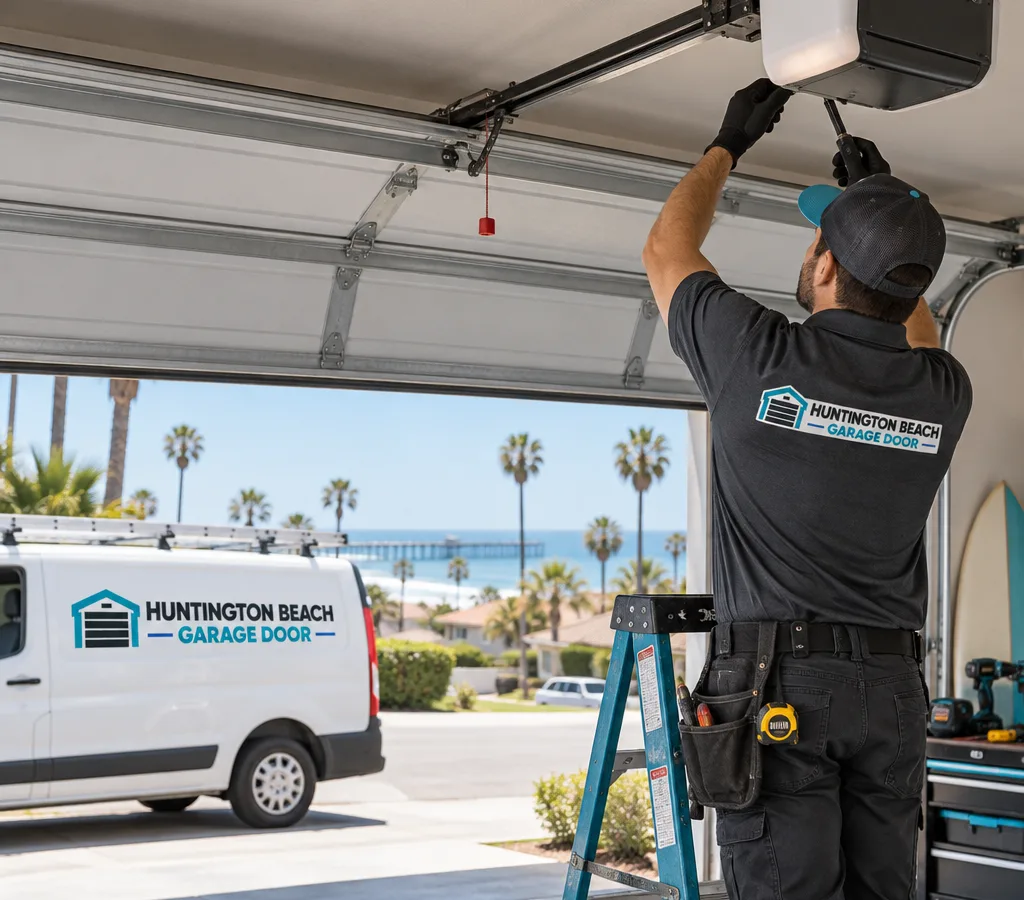
If you are searching for garage door opener repair Newport Beach, you are probably dealing with a door that will not open, will not close, reverses for no clear reason, or makes a grinding or rattling noise.
A garage door opener does more than spin a motor. It pulls the door along a rail while the door rides on rollers and tracks, and it relies on spring tension to keep the door balanced. That means an opener problem can be caused by the opener itself, the door hardware, or both. A local contractor will typically start by checking the door first because a door that is heavy or binding can make any opener look like it is failing.
Newport Beach garages also see salt air and coastal humidity, which can speed up rust on hinges, fasteners, springs, and sensor brackets. Small alignment shifts can trigger the safety system and stop a door mid-cycle.
Huntington Beach Garage Door connects you by phone with a local contractor who handles garage door opener troubleshooting, repair, and replacement decisions.
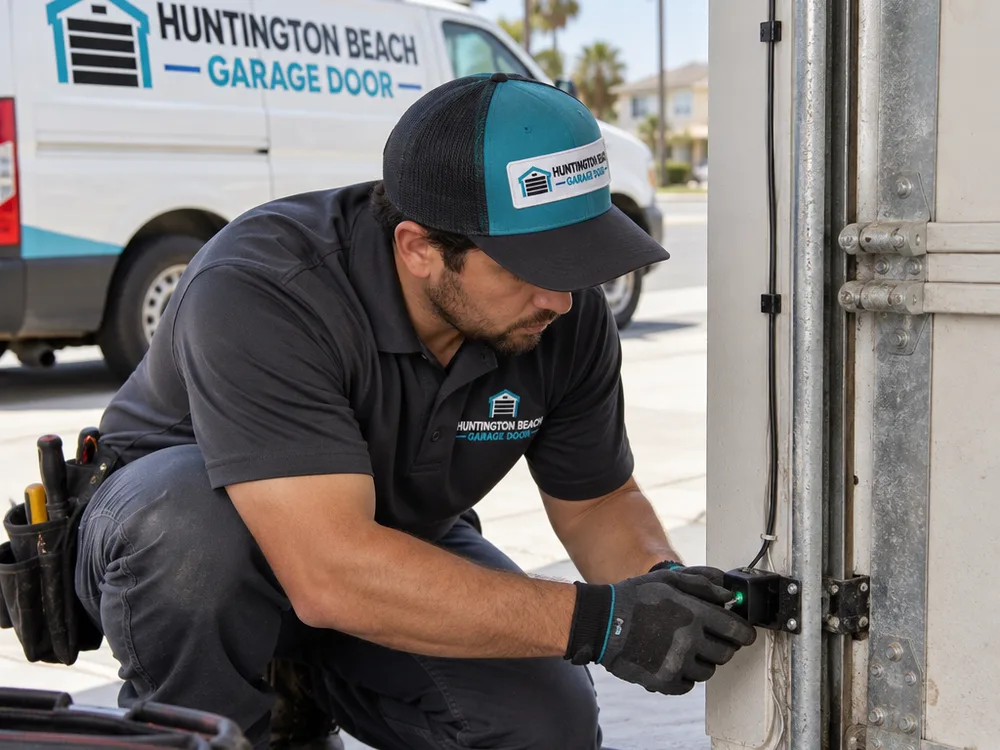
A properly balanced door can be lifted manually with one hand and stays near mid-travel. If the door is heavy, jerky, or drops, the opener may be fighting spring tension or track friction.
Photo eyes need a clear line of sight, solid brackets, and intact low-voltage wiring. Small misalignments can cause a door to reverse or refuse to close.
Limits tell the opener where open and closed are. Force settings help it stop when it meets resistance. Wrong settings can cause reversing, slamming, or incomplete closing.
Chain, belt, or screw drive components can wear, loosen, or strip. The contractor may inspect sprockets, trolley engagement, couplers, and mounting points.
A failed wall control, bad capacitor, or logic board issue can look like a motor problem. Testing usually includes checking outlets, GFCIs, and control inputs.
Share the symptoms, the opener type if you know it, and whether you can operate the door manually.
You get connected with an independent contractor who serves Newport Beach and takes on opener repairs and replacements.
The contractor asks a few questions, then inspects the opener and door system to pinpoint the cause and explain next steps.
Pricing, parts choices, and scheduling are discussed directly with the contractor, and you decide whether the plan fits your situation.
If your garage door will not move, reverses, or the opener is loud, describe what you are seeing once and get connected with a local contractor who can diagnose it and walk you through the fix.
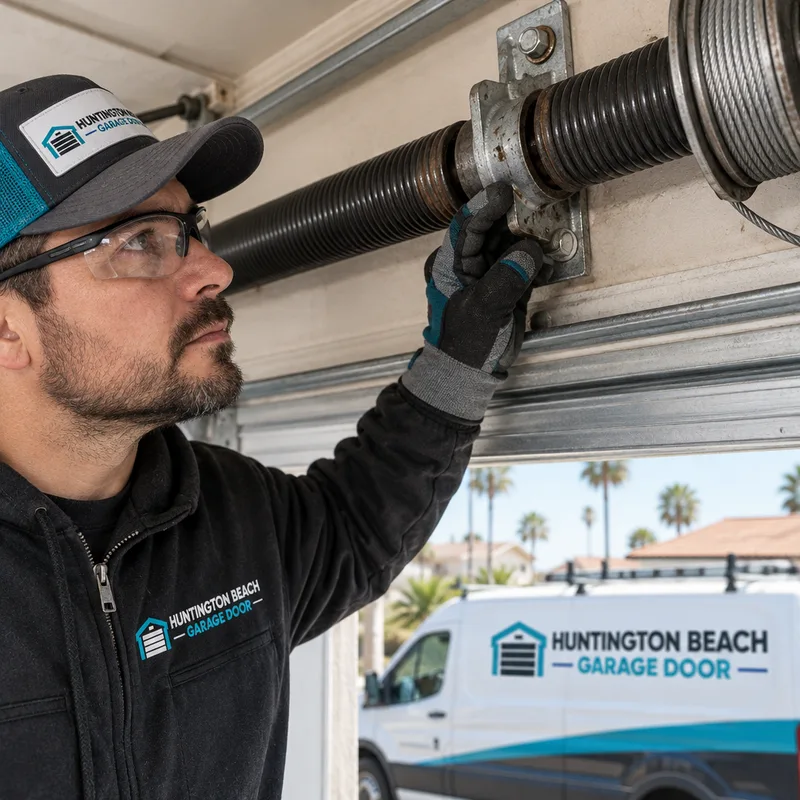
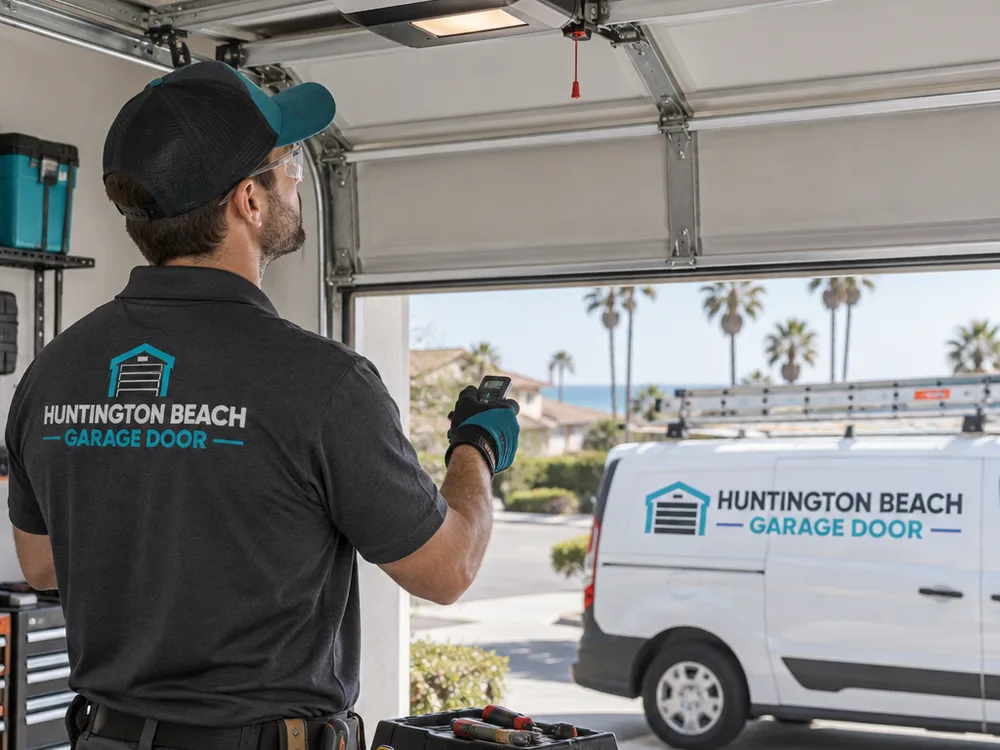
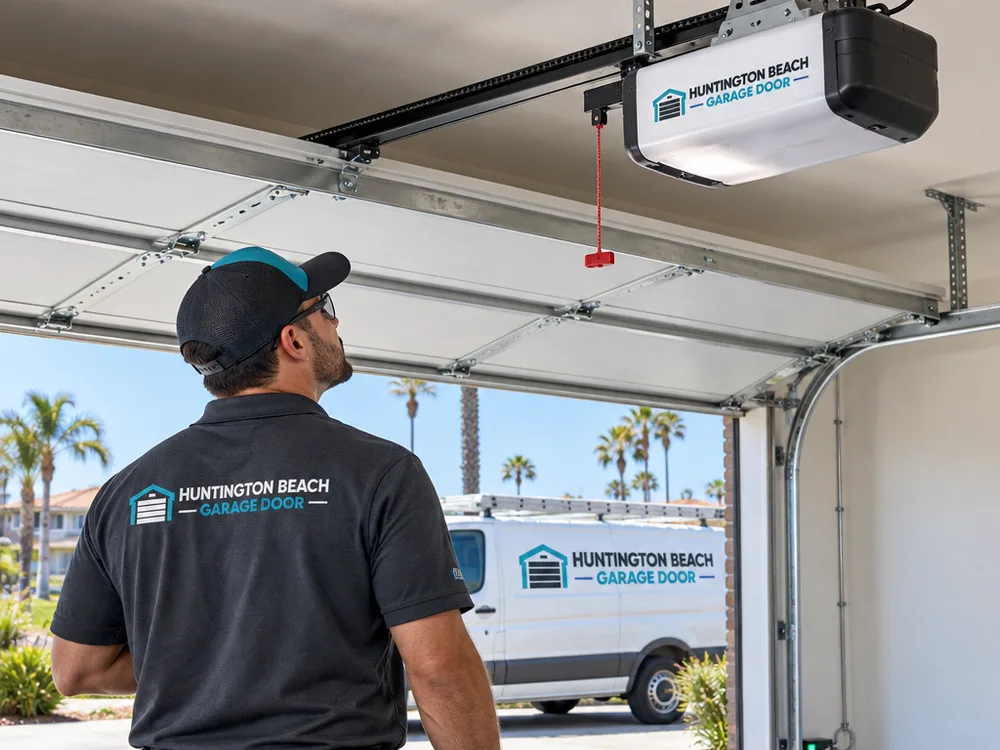
A simple first clue is whether the door moves smoothly by hand with the opener disconnected. If the door is heavy, sticks, or feels uneven, the issue is often in springs, rollers, tracks, or cables rather than the opener. A contractor will typically check door balance and track alignment early because an opener cannot work correctly on a door that is binding or out of balance.
Having the opener brand, the drive type—chain, belt, screw, or wall-mount—and a clear description of the symptom helps the contractor narrow it down. Mention whether the lights flash, whether the wall button works when the remote does not, and whether the door reverses at the floor or at a specific point in travel.
Reversing is commonly tied to the safety system or resistance during travel. Photo eyes that are misaligned, dirty, or loosely mounted can interrupt the beam and trigger a reverse. If sensors check out, the contractor may look for track binding, worn rollers, a bent rail, incorrect travel limits, or force settings that need adjustment.
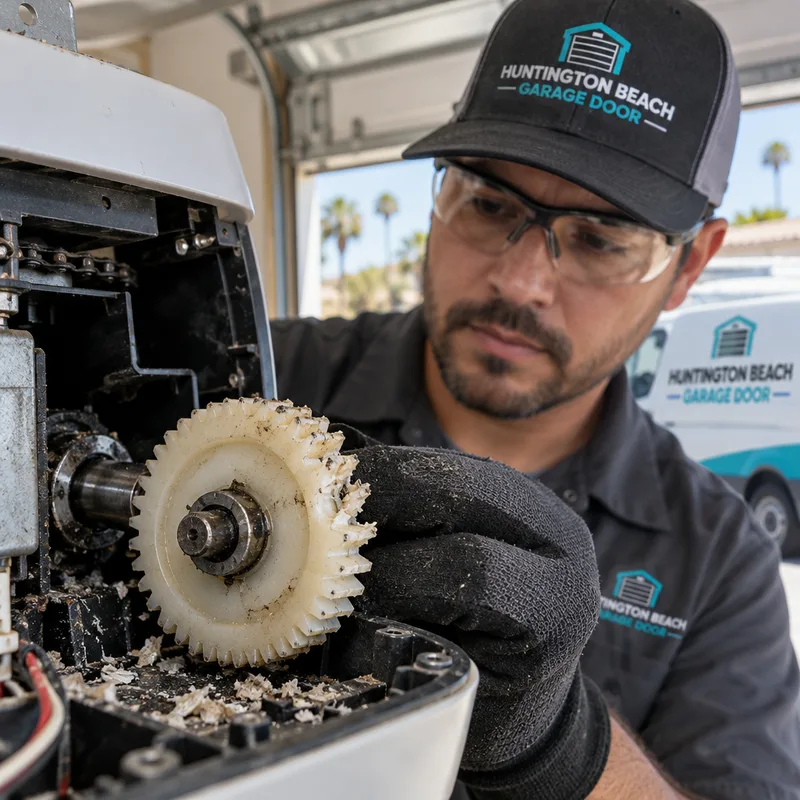
When the motor runs without door movement, the issue is often in the drive path between motor and trolley. Depending on the opener style, that can be a stripped gear, a broken chain or belt connection, a damaged coupler, or a trolley that is not engaged. A contractor can open the unit and confirm which part failed before recommending repair versus replacement.
Noise can come from several places, and some are repairable. Chain tension, loose mounting, worn rollers, and track alignment can all make a door sound louder than it should. If the noise is internal to the opener, the contractor may check motor bearings, the drive gear, and the rail assembly to see whether repairs are practical.
Garage door replacement Newport Beach decisions usually come up when the door itself is the source of repeated problems: damaged sections, persistent track issues, or hardware wear that keeps pulling the door out of alignment. If the door is heavy or compromised, replacing the opener alone can lead to another failure. The contractor can explain whether a door replacement, an opener replacement, or both is the cleanest path based on what they see.
Yes, opener troubleshooting generally requires access to the motor unit, the rail, the wall control, and the safety sensor wiring. If the car is parked close to the opener area, moving it back a bit can make inspection and adjustments easier.
Call Huntington Beach Garage Door, describe the opener and door symptoms once, and get connected with a local contractor who takes on garage door opener repair and related door issues in the Newport Beach area.
Yes. If the inspection points to a door hardware issue instead of an opener issue, the contractor you are connected with can usually address it as part of local garage door repair planning, since openers and doors work as one system.
Pick up the phone and describe what the opener and door are doing. We will connect you with a local contractor serving Newport Beach who can diagnose the cause and talk through repair or replacement options directly with you.